The next session at IAMCR 2019 starts with a paper by Matthias Degen, whose focus is on the challenges that journalists face when distributing news on Facebook in Germany. The platform is now reasonably well established in Germany, too, and this means that news outlets and journalists are also beginning to explore its use and perhaps normalising its use as part of their daily practices.
The project engaged in a quantitative analysis of the Facebook accounts of German political journalists from the federal press gallery (Bundespressekonferenz), and also conducted some short written interviews as well as a smaller number of …
The next speaker in this IAMCR 2019 session is Christian Baden, who shifts our focus to processes of polarisation. Some existing work on polarisation focusses on the themes and content along which groups are polarised, but in itself such differences may not be problematic; rather, the key issue here is whether such polarisation is increasing and results in incompatible perspectives.
Homophily and antagonism drive such processes. But homophily is extremely common and not necessarily a problem in itself; some homophily is natural, and it only becomes a problem in extreme situations. The question is therefore whether homophily increases over time …
The next speaker in this entertaining IAMCR 2019 session is Adeyanju Apejoye, whose focus is on ‘fake news’ in the 2019 Nigerian presidential election. ‘Fake news’ has become a critical issue in Nigerian politics, given the highly contested nature of the campaign, the shortcomings of Nigerian mainstream media, and the increasing role of online and social media in the country.
The project examined such issues through surveys and qualitative content analysis of news stories and comments, focussing on some eleven news stories with a particular focus on a province seeking to secede from the country. Some such stories used highly …
For the last stage of my travels I’ve arrived at the IAMCR 2019 conference in Madrid, where I’m starting with a session of journalism. The first presenter is Yu-Peng Lin, whose focus is the role of Facebook in news production and distribution in Taiwan.
Online news reading is now very prevalent in Taiwan, and this has affected journalistic practices. Facebook is the leading social media platform there, and some 53% of users access the news through this platform. The embrace of the platform by news organisations has led especially to the rise of a new role of content curators, who …
We finish the sessions at the 2019 AoIR Flashpoint Symposium with our second keynote, by Rebekah Tromble. She begins provocatively by suggesting that we as digital media researchers need to get over ourselves, so this should be interesting.
Many of the current problems for digital media research stem from the Cambridge Analytica scandal, which resulted in the shutdown of many of the primary sources of social media research data – especially the Application Programming Interfaces (APIs) of leading platforms. Most applications for API access to Facebook are now denied, for instance; the Instagram platform API was scheduled for shutdown even …
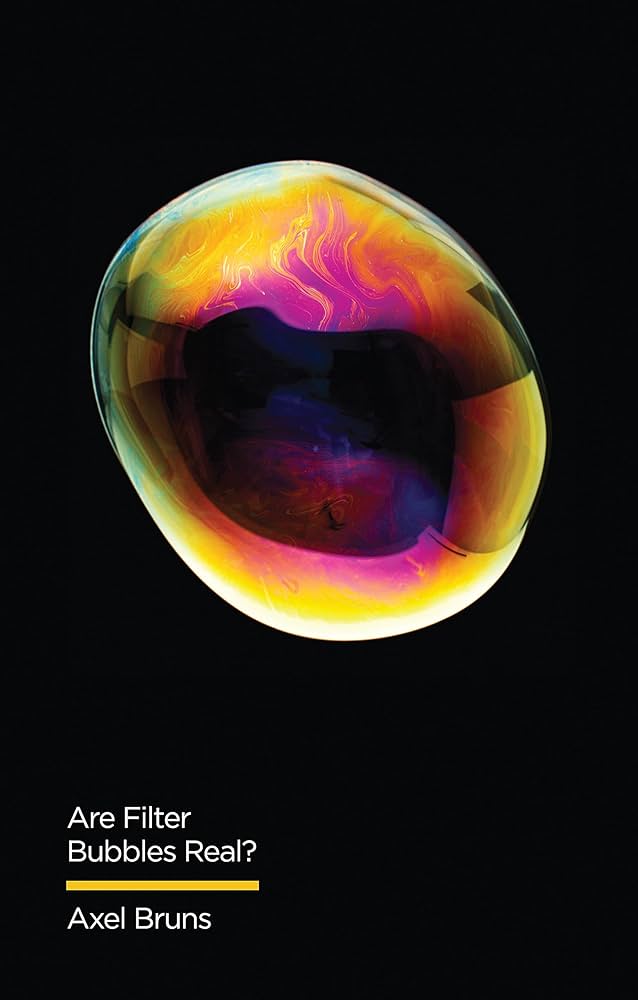
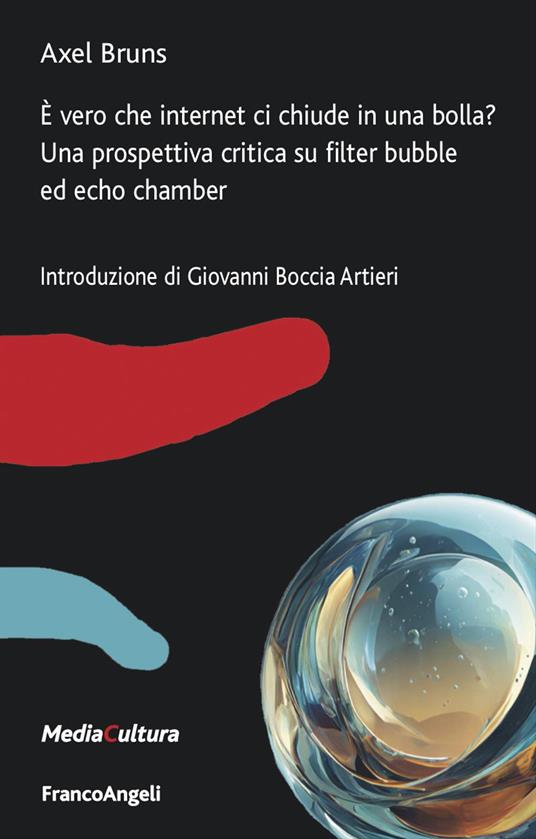
Within the next month or two, Polity Press will publish my new book Are Filter Bubbles Real?, which critically evaluates the ‘filter bubble’ as well as ‘echo chamber’ concepts that have been blamed for much of the current communicative and political dysfunction around the world. The book takes a sceptical view, and shows how these ill-conceived metaphors are actively distracting us from more important questions that are related not to the role of search engines and social media platforms and their algorithms in channelling our information and communication streams, but to the fundamental drivers of a growing societal and …
As a conclusion to my brief trip to Germany this April, I had the opportunity to present some of my current work to the newly established Center for Advanced Internet Studies, a collaborative institution involving several of the leading universities in North Rhine-Westphalia. I used this as a chance to present the general argument of my recent book Gatewatching and News Curation: Journalism, Social Media, and the Public Sphere (Peter Lang, 2018), as well as the key ideas of a new book, Are Filter Bubbles Real?, which is slated for release by Polity in July 2019.