Home
Snurblog — Axel Bruns

Main navigation

  • Home
  • Information
  • Blog
  • Research
  • Publications
  • Presentations
  • Press
  • Creative
  • Search Site

'Big Data'

Snurb — Thursday 6 November 2014 11:45

Mapping a National Twittersphere: A ‘Big Data’ Analysis of Australian Twitter User Networks (ECREA 2014)

'Big Data' | Social Media | Social Media Network Mapping | TrISMA (ARC LIEF) | Twitter | ECREA 2014 |

European Communication Conference (ECREA) 2014

Mapping a National Twittersphere: A ‘Big Data’ Analysis of Australian Twitter User Networks

Axel Bruns, Darryl Woodford, Troy Sadkowsky, and Tim Highfield

  • 13 Nov. 2014 – European Communication Conference (ECREA), Lisbon
Mapping a National Twittersphere: A 'Big Data' Analysis of Australian Twitter User Networks from Axel Bruns

Twitter research to date has focussed mainly on the study of isolated events, as described for example by specific hashtags or keywords relating variously to elections (Larsson & Moe, 2012), natural disasters (Mendoza et al., 2010), entertainment (Highfield et al., 2013) and sporting events (Bruns et al., 2014), and other moments of heightened activity in the network. This limited focus is determined in part by the limitations placed on large-scale access to Twitter data by Twitter, Inc. itself. By contrast, only a handful of studies – usually by researchers associated with commercially funded research organisations or with Twitter, Inc. itself – have utilised the Twitter ‘firehose’ or similar more comprehensive sources of data to explore broader patterns of traffic flows or follower connections on the platform (e.g. Leetaru et al., 2013).

This project builds on a long-term, large-scale analysis of the global Twitter userbase which has managed to identify within the over 725 million global registered Twitter accounts some 2.5 million Australian accounts (by matching profile details such as location, description, and timezone against a set of relevant criteria). Further, we analysed the follower/followee connections of these 2.5 million accounts and from this developed a first comprehensive map of account relationships within the Australian Twittersphere. In-depth network analysis of this map reveals the existence of a range of clusters of especially tightly interconnected users, linked to each other by other accounts acting as bridges between the clusters. In turn, qualitative exploration of the leading account’s profiles in each cluster provides an indication of the various areas of thematic focus which have determined the formation of these clusters, and their association with other clusters in the same network vicinity. Further correlation with other relevant profile data (including the creation date for each account, its level of tweeting activity, and the date of the account’s last tweet) offers additional opportunities to trace the emergence and growing complexity of the Australian Twittersphere over time, from the earliest adopters of the platform to its most recent users, and to filter the overall network for the most active and most persistent users.

This study represents the first ever comprehensive investigation of the development of a national Twittersphere as an entity in its own right. While the global nature of Twitter as a social media platform means that Australian accounts will also be connected with their counterparts in other countries, it is still to be expected that shared interests and identity lead to the majority of connections between accounts to occur within the same national user population, and our analysis of these connection patterns provides an important indicator of the themes around which these connections crystallise, as well as of the longitudinal development of these clusters of interests.

Bruns, A., Weller, K., & Harrington, S. (2014). Twitter and Sports: Football Fandom in Emerging and Established Markets. In K. Weller, A. Bruns, J. Burgess, M. Mahrt, & C. Puschmann (Eds.), Twitter and Society (pp. 263–280). New York: Peter Lang.

Highfield, T., Harrington, S., & Bruns, A. (2013). Twitter as a Technology for Audiencing and Fandom: The #Eurovision Phenomenon. Information, Communication & Society, 16(3), 315–39. doi:10.1080/1369118X.2012.756053

Larsson, A.O., & Moe, H. (2011). Studying Political Microblogging: Twitter Users in the 2010 Swedish Election Campaign. New Media & Society, 14(5). doi:10.1177/1461444811422894

Leetaru, K., Wang, S., Cao, G., Padmanabhan, A., & Shook, E. (2013). Mapping the Global Twitter Heartbeat: The Geography of Twitter. First Monday, 18(5). doi:10.5210/fm.v18i5.4366

Mendoza, M., Poblete, B., & Castillo, C. (2010) Twitter under Crisis: Can We Trust What We RT? Paper presented at Social Media Analytics, KDD '10 Workshops, Washington, DC, 25 July 2010. Available from: http://research.yahoo.com/files/mendoza_poblete_castillo_2010_twitter_terremoto.pdf

» continue reading...
Snurb — Thursday 6 November 2014 09:44

Mapping Online Publics: New Methods for Twitter Research (Twitter Analytics Workshop 2014)

'Big Data' | Social Media | Social Media Network Mapping | Twitter | Conferences |

Twitter Analytics Workshop 2014

Mapping Online Publics: New Methods for Twitter Research

Axel Bruns, Jean Burgess, and Darryl Woodford

  • 12 June 2014 – Twitter Workshop: Analysing Network Data, Göttingen
Mapping Online Publics: New Methods for Twitter Research from Axel Bruns

The study of Twitter at large scale and in close to real time requires the development of new methodological approaches which are able to process, analyse, and visualise the ‘big social data’ which can be accessed through the Twitter API. The Mapping Online Publics project in the ARC Centre of Excellence for Creative Industries and Innovation (CCI) at Queensland University of Technology has developed a number of approaches to the study of short- and long-term Twitter publics, from analyses of the dynamics of ad hoc issue publics around natural disasters and political crises through the tracking of information flows and audience interests across mainstream and social media to the comprehensive mapping of the Australian Twittersphere. This presentation will outline the methodological approaches developed for this work, and reflect on the opportunities and challenges facing social media researchers.


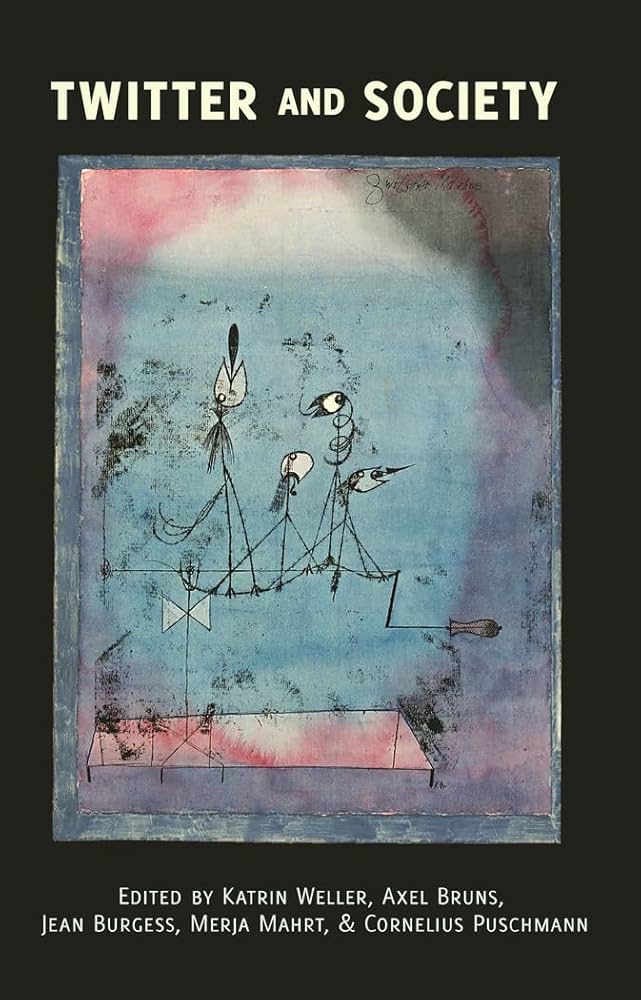
Axel Bruns is an Australian Research Council Future Fellow and Associate Professor in the Creative Industries Faculty at Queensland University of Technology in Brisbane, Australia. He leads the QUT Social Media Research Group and is the author of Blogs, Wikipedia, Second Life and Beyond: From Production to Produsage (2008) and Gatewatching: Collaborative Online News Production (2005), and a co-editor of Twitter and Society (2014), A Companion to New Media Dynamics (2012) and Uses of Blogs (2006). His current work focusses on the study of user participation in social media spaces such as Twitter, especially in the context of acute events. His research blog is at http://snurb.info/, and he tweets at @snurb_dot_info. See http://mappingonlinepublics.net/ for more details on his research into social media.

Jean Burgess is Deputy Director of the ARC Centre of Excellence for Creative Industries & Innovation (CCI) and Associate Professor, Digital Media in the Creative Industries Faculty at Queensland University of Technology. She is involved in several research projects that apply computer-assisted methods to the analysis of large-scale social media data. Her books include YouTube: Online Video and Participatory Culture (Polity Press, 2009), Studying Mobile Media: Cultural Technologies, Mobile Communication, and the iPhone (Routledge, 2012) and A Companion to New Media Dynamics (Wiley-Blackwell, 2013). Over the past decade she has worked with a large number of government, industry and community-based organisations, focusing on the uses of social and co-creative media to increase participation, advocacy and engagement.

Darryl Woodford is a Research Fellow in the ARC Centre of Excellence for Creative Industries & Innovation (CCI) at Queensland University of Technology. He has a background in Engineering and Game Studies, including research on the agency of avatars in virtual environments. His current research includes work on social norms and regulation in the video game and gambling industries, and he is leading the development of new digital methods for measuring and evaluating television audience engagement using social media analytics.

» continue reading...
Snurb — Friday 24 October 2014 13:46

The Global Demographics of Twitter

'Big Data' | Social Media | TrISMA (ARC LIEF) | Twitter | AoIR 2014 |

This final morning at AoIR 2015 opens with my paper with Darryl Woodford and Troy Sadkowsky which explores the global Twitter userbase. Our slides are below:

Exploring the Global Demographics of Twitter from Axel Bruns
» continue reading...
Snurb — Thursday 23 October 2014 11:20

The Relevance of Devices in Divergent Tweeting Practices

'Big Data' | Social Media | Twitter | AoIR 2014 |

The first presenters on this second day at AoIR 2015 are Bernhard Rieder and Carolin Gerlitz, whose interest is in using data from Twitter's 'spritzer' firehose! which delivers a random 1% or all current tweets. How can this be used to identify individual types of activity in relation of the wider platform ecology? In particular, for the purposes of this paper, what light does it shed on the use of different devices for tweeting?

The project collected some 32 million tweets from the spritzer firehose over the course of one week, and key tools for tweeting were especially iPhone …

» continue reading...
Snurb — Friday 20 June 2014 01:04

Entering the Age of the Generative Algorithm

'Big Data' | Social Media | Social Media and the Transformation of Public Space (ASMC) 2014 |

The final keynote at ASMC14 for today is by Bernhard Rieder from the Digital Methods Initiative, who stepped in at short notice for Tarleton Gillespie who could not be here. He begins by noting the role of algorithms in our experience of information and media; they select what information is considered most relevant to us, and are now a crucial part of our participation in public life. This raises a number of questions – and starting with search engines, such algorithms have been considered increasingly by researchers.

One way to approach algorithms is by considering the question of knowing: what …

» continue reading...
Snurb — Monday 16 June 2014 22:03

Conference Blogging Coming Up

Travel | 'Big Data' | Social Media | Social Media Network Mapping | Twitter | Research Projects | Publications | Conferences | Social Media and the Transformation of Public Space (ASMC) 2014 |

I’m currently on the road again, as part of a trip which has already taken me through Hamburg (for a meeting with our research partners at the Hans-Bredow-Institut) and Göttingen (for the inaugural workshop of our new ATN-DAAD-funded research collaboration with colleagues at the Göttingen Digital Humanities Centre. The latter will focus especially on developing new methods for analysing and visualising social media networks, building on the considerable work we’ve already done in this area – and at the workshop last week we’ve already made good progress towards a few new ideas for what we can do. With my …

» continue reading...
Snurb — Friday 30 May 2014 09:07

A Mid-Year Update of Recent Publications

Produsers and Produsage | Gatewatching and Citizen Journalism | Journalism | 'Big Data' | Social Media | Social Media in Times of Crisis (ARC Linkage) | Social Media Network Mapping | Crisis Communication | Twitter | Publications |

I’ve continued to update my lists of publications and presentations over the past months, but I think it’s time to do another quick round-up of recent work before all the new projects start in earnest.

First off, my colleagues Darryl Woodford, Troy Sadkowsky and I have been making some good progress developing further methodological approaches to Twitter research – focussing this time especially on examining how accounts gain their followers (for some of the outcomes from that research, also see our coverage at Mapping Online Publics):

Axel Bruns, Darryl Woodford, and Troy Sadkowsky. “Towards a Methodology for Examining …

» continue reading...
Snurb — Friday 25 April 2014 13:00

Different Forms of Talk on Twitter

'Big Data' | Social Media | Social Media Network Mapping | Twitter | Conferences |

It’s been a little quiet again here, as I’ve taken February and March off on Long Service Leave. That’s all about to change, though, because two major new research projects are about to start now – more of these soon.

For the moment, here’s my first conference presentation for 2014, from the Media Talk symposium at Griffith University in Brisbane. I used this to work through the three layers of communication on Twitter which Hallvard Moe and I have identified in our chapter in Twitter and Society, and to provide some examples for how these layers operate in practice …

» continue reading...
Snurb — Friday 25 April 2014 12:58

Layers of Communication: Forms of Talk on Twitter (Media Talk 2014)

'Big Data' | Social Media | Social Media Network Mapping | Twitter | Conferences |

Media Talk Symposium 2014

Layers of Communication: Forms of Talk on Twitter

Axel Bruns

  • 24 Apr. 2014 – Media Talk Symposium, Brisbane

With some 2.5 million accounts, especially representing the influential 25-55 age range, Twitter has become an important social media platform in Australia. It has found key applications in areas ranging from politics and crisis communication to entertainment and sports, but also facilitates everyday communication between like-minded individuals and communities. In spite of the increased scholarly attention on the uses of Twitter across these practices, however, the question of what kind(s) of communication Twitter represents remains largely underexplored, and the forms of interaction that the platform enables have yet to be fully theorised.

Building on prior work by Bruns & Moe (2014), this paper explores the various layers of communication which exist on Twitter, from direct, dyadic @reply exchanges between clearly identified communication partners at the micro level through narrowcast message dissemination to the followers of an account at the meso level to many-to-many exchanges in ad hoc publics created by hashtags at the macro level. It outlines the different types and formats of talk which are able to occur at each of these levels, and shows the interweaving of the information and communication flows which take place on each of them. In doing so, it outlines the complexities of communication on Twitter, and points to new challenges in Twitter research.

References:

Axel Bruns and Hallvard Moe. (2014). “Structural Layers of Communication on Twitter.” In Twitter and Society, eds. Katrin Weller, Axel Bruns, Jean Burgess, Merja Mahrt, and Cornelius Puschmann. New York: Peter Lang, 2014. 15-28.

» continue reading...
Snurb — Wednesday 13 November 2013 17:19

Presenting Our Social Media Work at the 2013 IBM Research Colloquium

'Big Data' | Social Media | Social Media in Times of Crisis (ARC Linkage) | Social Media Network Mapping | New Media and Public Communication (ARC Discovery) | Crisis Communication | Twitter | Conferences |

Now that I’m back in Australia from my extended conference trip, I immediately got back on a plane to travel to a freezing Melbourne, to present our social media research in crisis communication and beyond at the 2013 IBM Research Colloquium. Below are my slides and audio – many thanks again to Jennifer Lai and her team at IBM Research Australia for the invitation!

Social Media Issue Publics in Australia from Axel Bruns
» continue reading...

Pagination

  • Previous page
  • 23
  • Next page
'Big Data'
INFORMATION
BLOG
RESEARCH
PUBLICATIONS
PRESENTATIONS
PRESS
CREATIVE

Recent Work

Presentations and Talks

Revisiting ‘the’ Public Sphere and Its Algorithmically Shaped Publics (ZeMKI ComAI 2026)

» more

Books, Papers, Articles

Untangling the Furball: A Practice Mapping Approach to the Analysis of Multimodal Interactions in Social Networks (Social Media + Society)

» more

Opinion and Press

Breaking through Infoglut: The Anger-Information Overload Cycle (360info)

» more

Creative Work

Brightest before Dawn (CD, 2011)

» more

Lecture Series


Gatewatching and News Curation: The Lecture Series

Bluesky profile

Mastodon profile

Queensland University of Technology (QUT) profile

Google Scholar profile

Mixcloud profile

[Creative Commons Attribution-NonCommercial-ShareAlike 4.0 Licence]

Except where otherwise noted, this work is licensed under a Creative Commons BY-NC-SA 4.0 Licence.