Home
Snurblog — Axel Bruns

Main navigation

  • Home
  • Information
  • Blog
  • Research
  • Publications
  • Presentations
  • Press
  • Creative
  • Search Site

Journalism

Snurb — Saturday 10 July 2010 00:00

The Public Habitus of Kevin Rudd

Politics | Journalism | ANZCA 2010 |

Canberra.


The next speaker at ANZCA 2010 is Geoffrey Craig, whose focus is on the public image of (now former) Australian Prime Minister Kevin Rudd. Rudd has been widely criticised for an often somewhat stilted public persona. This ties into Bourdieu's concept of habitus, the permanent manners of being, seeing, acting and thinking, and the schemes of perception, conception, and action. These are also situated in fields of action which bestow individuals with authority and power once they understand and negotiate the norms and rules of the specific game.
» continue reading...
Snurb — Friday 9 July 2010 23:59

Enviromental Dynamics in the 2010 Tasmanian State Elections

Politics | Journalism | ANZCA 2010 |

Canberra.


The final session at ANZCA 2010 today starts with Libby Lester, whose focus is on online media in the 2010 Tasmanian state elections. She begins by describing the election tally room, at the Hobart casino (!); there tends to be little cross-traffic between the tally room and the rest of the casino. Tallying is still a very traditional process, with updates being made physically on boards, and state and local journalists going about their business, with a few national journalists thrown in. The general public is allowed in to observe the process, but without simultaneous access to broadcast media it is difficult to understand what is happening.

» continue reading...
Snurb — Friday 9 July 2010 23:56

Patterns in Online Debate on SBS's Insight Fora

Politics | Produsage Communities | Journalism | ANZCA 2010 |

Canberra.


The final speaker in this session at ANZCA 2010 is Georgie McClean from SBS, whose focus is on cultural participation in a multicultural context. SBS has a brief to enhance cultural exchange and understanding, and with the move from public service broadcasting to public service media there are new opportunities for this through the use of new participatory media platforms. However, while some barriers to access are lowered, many constituencies can still be left out of the process - those already engaged may be those most likely to profit from new forms of engagement, too.

» continue reading...
Snurb — Friday 9 July 2010 23:54

Problematic Media Representations of Sudanese Australians

Politics | Journalism | ANZCA 2010 |

Canberra.


The first paper session at ANZCA 2010 starts with a presentation by Tim Marjoribanks, whose interest is in media representations of Sudanese people in Australia. He begins by pointing to the societal context of debates over discrimination against African Australians; the Australian Human Rights Commission reported on this recently and found evidence of discrimination and resultant social exclusion across many aspects of their lives. Negative representations in the mainstream media were partly blamed for this, too. The experiences of Sudanese people living in Australia have been especially highlighted in this context, especially also as they are the largest groups of humanitarian arrivals from Africa into Australia.

» continue reading...
Snurb — Friday 9 July 2010 23:52

The Strength and Folly of Democracy

Politics | Government | Journalism | ANZCA 2010 |

Canberra.


After yesterday's CCI Symposium, I've made the trip down to frosty Canberra for this year's ANZCA conference. We start this morning with the first conference keynote, by John Durham Peters, who begins by considering democracy as a political category - for a very long time, it has been seen as an impossible and preposterous, so for it to be seen as a sine qua non is remarkable.

There are various obstacles to democracy, of course: chiefly, scale and human nature. For the ancient Greeks, democracy had to be small - even Athens was seen as too large, and democracy was thought to be able to be workable only if all participants were able to get to know one another personally. For Plato, the ideal number of citizens for a functioning democracy was precisely 5040, in fact. At the same time, small size was also seen as making democracy unsustainable. So, democracy was seen as most workable where citizens could meet one another in political assemblies.

» continue reading...
Snurb — Thursday 1 July 2010 15:02

Publication Update: Three New Chapters

Politics | Government | e-Government | Produsage Communities | Produsers and Produsage | Journalism | Gatewatching and Citizen Journalism | Filesharing | Industrial Journalism | Produsage in Business | EDEM 2009 | Publications | Music |

With the Internet Turning 40 and International Communication Association conferences completed, I'm briefly back in Brisbane, before setting off for the Australia/New Zealand Communication Association (ANZCA) conference in Canberra next week (hopefully with a recharged audio recorder!).

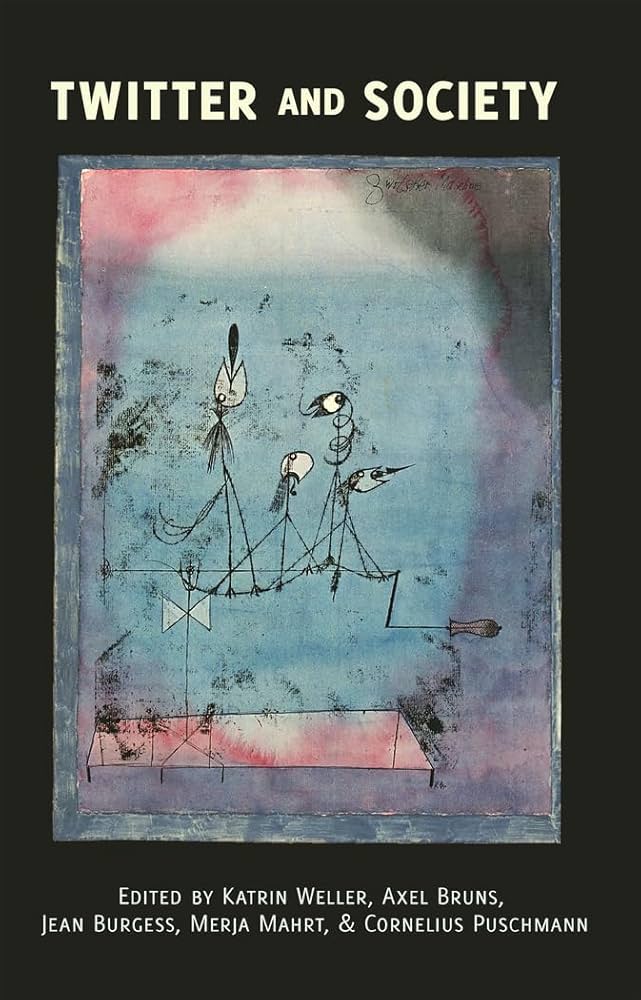
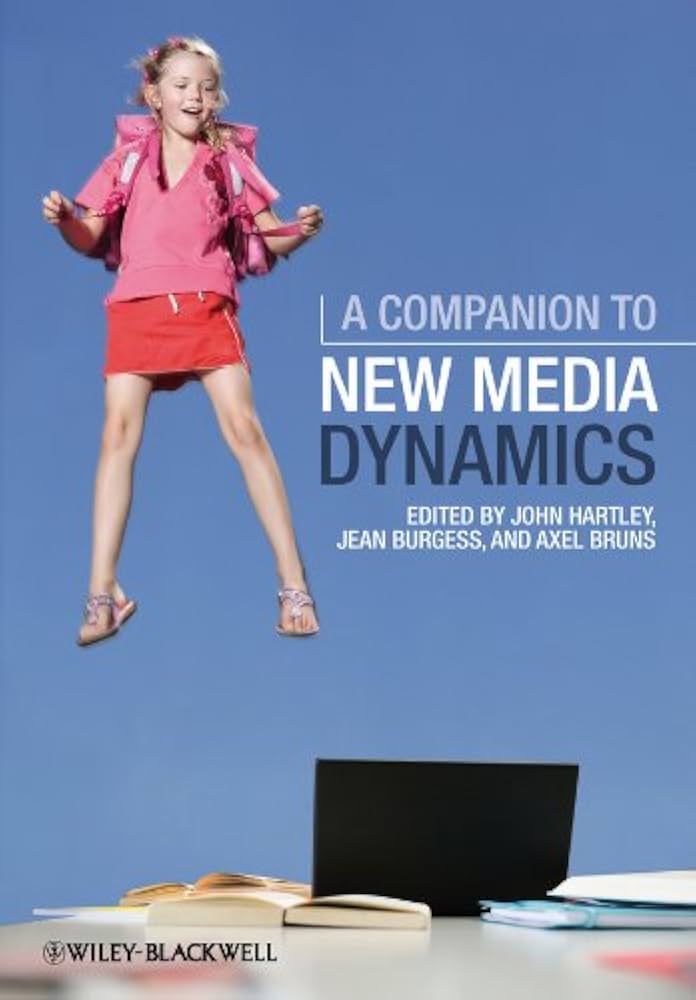
In the meantime, here's a quick update on some new publications I've been involved in - a number of my recent book chapters on a range of topics have now been published:

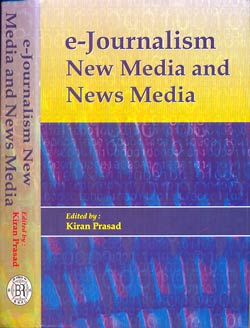
First, with a chapter on "News Blogs and Citizen Journalism" in e-Journalism: New Media and News Media I'm introducing my work on gatewatching and citizen journalism to an Indian readership - the book was edited by Kiran Prasad, who was my office mate at the University of Leeds while I was there in 2007 to do some research for the produsage book, and was published by B.R. Publishing in Delhi. I don't think the publisher actually has a Website - but there's a good overview of the collection at Cyberjournalist, and it also includes contact details for BR Publishing.

» continue reading...
Snurb — Friday 25 June 2010 22:45

Journalism Studies as the Foundation for the Communication Field?

Journalism | ICA 2010 |

Singapore.


The day at ICA 2010 ends with the ICA Presidential Address by Barbie Zelitzer, who will focus on journalism studies as a component of the overall discipline of communication research, at a time when both journalism and the discipline face significant challenges. Journalism's centrality to communication is embedded in communication's historical narratives - while parts of communication date back to rhetoric and other fields, there is a strong affinity between journalism and communication. Both were projects born in and of modernity; journalism pursues truth and offers criticism and rationality as key elements, champions reason and free choice, and is committed to progress, democracy, and individuality.

» continue reading...
Snurb — Thursday 24 June 2010 19:52

Attitudes towards Journalism Shield Laws amongst Journalists and Bloggers

Politics | Journalism | Blogs and Blogging | Gatewatching and Citizen Journalism | Industrial Journalism | ICA 2010 |

Singapore.


The next speaker at ICA 2010 is C.W. Anderson, whose interest is in debates over the US shield law for journalists. Can we see a process of professional boundary maintenance in this (protecting definitions of who is and isn't a journalist)? The shield law debate emerged from questions about what legal protections were available to journalists who were suppoenaed to release information gathered from confidential sources; the law would protect journalists and their sources and grant them immunity from particular forms of prosecution.

» continue reading...
Snurb — Thursday 24 June 2010 19:50

Differences in Content between Legacy and Citizen Journalism Sites

Journalism | Gatewatching and Citizen Journalism | Industrial Journalism | ICA 2010 |

Singapore.


The next speaker at ICA 2010 is Salim Al-Habash (?), presenting on behalf of the paper's actual authors. He begins by noting the large number of blogs now in existence; some 44% of online news users have their pages customised to include news sites; 75% of Americans get news via email and social network sites; 51% share their news in this way, and 52% get news from their followers on social network sites. We can also categorise types of blogging: founder/manager (single-authored blogs); hybrid sites (volunteers, part-timers, outside participation); and open sites (overseen by administrators).

» continue reading...
Snurb — Thursday 24 June 2010 19:48

Differences between Blog Comments and Letters to the Editor

Journalism | Blogs and Blogging | ICA 2010 |

Singapore.


OK, after my break from proceedings I'm back for my final ICA 2010 session today, which starts with Donna Stephens. She begins with the view that one of the functions of the media is the civic exchange of ideas - orchestrated for example through the letters to the editor pages. Today, blogs have taken over some of that role, and enabled a more instant form of feedback and conversation - however, they are also different: more anonymous, better controllable by the poster, and more immediate.

Also, few people write letters to the editor, while opinion exchange through blogs may happen at a greater volume or continue for longer than in the mainstream media. Blogs no longer follow the media agenda, too, but occasionally set it as well. But what is the difference in content between the two? This study compared letters to the editor to an Arkansas newspaper with comments on the general blog of another statewide newspaper, in each case relating to an (at first secret) $300,000 bonus payment for the University of Central Arkansas president Lu Hardin, and the events following these revelations through to Hardin's resignation.

» continue reading...

Pagination

  • Previous page
  • 79
  • Next page
Journalism
INFORMATION
BLOG
RESEARCH
PUBLICATIONS
PRESENTATIONS
PRESS
CREATIVE

Recent Work

Presentations and Talks

Revisiting ‘the’ Public Sphere and Its Algorithmically Shaped Publics (ZeMKI ComAI 2026)

» more

Books, Papers, Articles

Untangling the Furball: A Practice Mapping Approach to the Analysis of Multimodal Interactions in Social Networks (Social Media + Society)

» more

Opinion and Press

Breaking through Infoglut: The Anger-Information Overload Cycle (360info)

» more

Creative Work

Brightest before Dawn (CD, 2011)

» more

Lecture Series


Gatewatching and News Curation: The Lecture Series

Bluesky profile

Mastodon profile

Queensland University of Technology (QUT) profile

Google Scholar profile

Mixcloud profile

[Creative Commons Attribution-NonCommercial-ShareAlike 4.0 Licence]

Except where otherwise noted, this work is licensed under a Creative Commons BY-NC-SA 4.0 Licence.