Home
Snurblog — Axel Bruns

Main navigation

  • Home
  • Information
  • Blog
  • Research
  • Publications
  • Presentations
  • Press
  • Creative
  • Search Site

Produsage Communities

Snurb — Saturday 10 July 2010 00:08

Civil Conversations on Facebook during the 2009 Indonesian Presidential Elections

Politics | Produsage Communities | ANZCA 2010 |

Canberra.


Finally at ANZCA 2010 we're on to Hamideh Molaei, whose interest is in the use of social media during the 2009 presidential elections in Indonesia. Social media have impacted on political processes, of course - social media are used for networking and fundraising, political discussion, and the dissemination of political messages. Facebook has been used in this way in a number of contexts, of course - both by politicians and ordinary citizens.

Six social media sites - including Facebook - are amongst the ten most popular sites in Indonesia. The last presidential election there was held on 8 July 2009, as the second direct election after the end of the Suharto regime, it was won by Susilo Bambang Yudhoyono. Facebook was used as a venue for advertising and disseminating election-related material. Candidates had personal pages; there were election education groups; and a variety of independent pages were also set up.

» continue reading...
Snurb — Saturday 10 July 2010 00:06

Viewer Engagement with the Interactive Drama of Reservoir Hill

Produsage Communities | ANZCA 2010 | Television |

Canberra.


The final session at the ANZCA 2010 conference starts with Carolyn Michelle, whose interest is in the TVNZ programme Reservoir Hill, released weekly as an online interactive drama and advertised on TV and buses; the story was about a teenage girl moving to a new city who resembled another girl from that community who had gone missing. Each of the Webisodes lasted some 6-10 minutes.

Viewers were encouraged to text in with comments and advice to the main character, and extra bonus scenes were created from this; they were also incorporated in further episodes, and viewers' names were acknowledged. There was also a video blog by the character, as well as Facebook and Bebo pages. Initially, the show had an audience of some 20,000, but gradually this audience declined; it also won a Digital Emmy.

» continue reading...
Snurb — Saturday 10 July 2010 00:03

Parodic Self-Censorship in Singaporean Online Discussion Fora

Politics | Government | Produsage Communities | ANZCA 2010 |

Canberra.


The final presenter in this session at ANZCA 2010 is Michael Galvin, whose focus is on Singaporean politics - and he begins by pointing to Manuel Castells's discussion of power and counterpower in the network society during his 2006 ICA keynote. Castells's proposition is that the development of interactive horizontal communication has contributed to the rise of 'mass self-communication', shifting the public sphere from the institutional realm to the new communications space.

Michael's study applies this thesis to the online site for citizen journalism of the Straits Times newspaper in Singapore, STOMP. While the Times is essentially an organ of the Singaporean government, which has long openly promoted self-censorship in the media, this site for horizontal interactive communication - according to Castells - should provide a space for the operation of counterpower; for Castells, this is a given and indeed a result of a 'natural law' of society.

» continue reading...
Snurb — Saturday 10 July 2010 00:03

Patterns of Activity in Political Online Discussion Boards in South Korea

Politics | Produsage Communities | ANZCA 2010 |

Canberra.


The next speaker in this ANZCA 2010 session is Sora Park, whose focus is on online participation behaviour in South Korea. As part of a larger study, she conducted a content analysis of online discussion boards - which are a major site for political discussion and organisation in the country. How is information exchanged, diffused, and consumed online through such spaces?

Korea has one of the highest levels of broadband penetration in the world; some 90% of the population use the Net daily, and some 29% participate in online discussions. During the political riots in 2008, online discussion boards were important for organising activities, but there are also concerns about the lack of balance in political discussion - a spiral of silence may be present here, reducing the presence of alternative voices.

» continue reading...
Snurb — Friday 9 July 2010 23:56

Patterns in Online Debate on SBS's Insight Fora

Politics | Produsage Communities | Journalism | ANZCA 2010 |

Canberra.


The final speaker in this session at ANZCA 2010 is Georgie McClean from SBS, whose focus is on cultural participation in a multicultural context. SBS has a brief to enhance cultural exchange and understanding, and with the move from public service broadcasting to public service media there are new opportunities for this through the use of new participatory media platforms. However, while some barriers to access are lowered, many constituencies can still be left out of the process - those already engaged may be those most likely to profit from new forms of engagement, too.

» continue reading...
Snurb — Thursday 1 July 2010 15:02

Publication Update: Three New Chapters

Politics | Government | e-Government | Produsage Communities | Produsers and Produsage | Journalism | Gatewatching and Citizen Journalism | Filesharing | Industrial Journalism | Produsage in Business | EDEM 2009 | Publications | Music |

With the Internet Turning 40 and International Communication Association conferences completed, I'm briefly back in Brisbane, before setting off for the Australia/New Zealand Communication Association (ANZCA) conference in Canberra next week (hopefully with a recharged audio recorder!).

In the meantime, here's a quick update on some new publications I've been involved in - a number of my recent book chapters on a range of topics have now been published:

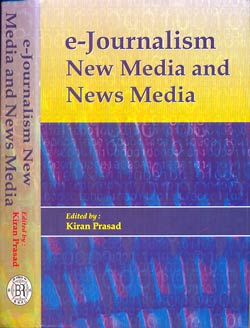
First, with a chapter on "News Blogs and Citizen Journalism" in e-Journalism: New Media and News Media I'm introducing my work on gatewatching and citizen journalism to an Indian readership - the book was edited by Kiran Prasad, who was my office mate at the University of Leeds while I was there in 2007 to do some research for the produsage book, and was published by B.R. Publishing in Delhi. I don't think the publisher actually has a Website - but there's a good overview of the collection at Cyberjournalist, and it also includes contact details for BR Publishing.

» continue reading...
Snurb — Saturday 26 June 2010 15:52

Effects of the Size and Diversity of Personal Networks on Civic Engagement

Politics | Produsage Communities | Internet Technologies | ICA 2010 |

Singapore.


The final presenter in this session at ICA 2010 is Homero Gil de Zúñiga, whose interest is in civic engagement. How is this related to interpersonal and computer-mediated networks, and how does this play out differently for weak and strong ties in the networks? Is the effect of interpersonal and computer-mediated networks mediated by access to weak ties? Which setting is more predictive of civic engagement?

Past research in this area has shown connections between demographics and civic engagement; social orientations and civic engagement; and media use and civic engagement; the presence of citizen communication networks also has a positive effect. Finally, there are differences between strong and weak ties: being exposed to a wider range of connections through weak ties can variously have positive and negative effects - providing a greater diversity of information that may spark civic action, for example.

» continue reading...
Snurb — Saturday 26 June 2010 15:40

Uses of Twitter during Major Events

Produsage Communities | Internet Technologies | ICA 2010 | Television |

Singapore.


Finally in this ICA 2010 session we move to Yvette Wohn, talking about how people tweet about TV. When TV was first introduced, it was seen as a social medium, as families gathered around it to watch; later, it was seen as creating a social gap, as enabling people to disengage from reality, as increasing individualism, and (when multiple TVs in the same home became more commonplace) as fragmenting families.

Today, people watch more TV than ever - now also online, on mobiles, and on timeshift devices. At the same time, TV use may be becoming more social again - echoing some of the early commercial attempts to introduce greater immediate social dimensions for television by adding a (telephone, online, ...) social backchannel to the television set or media device: today, it is social media that are adding that backchannel.

» continue reading...
Snurb — Saturday 26 June 2010 15:38

Communication Styles on Twitter

Produsage Communities | Internet Technologies | ICA 2010 |

Singapore.


The next speaker at ICA 2010 is Chih-Hui Lai, whose focus is on the Facebook newsfeed, the Twitter feed, and similar feeds as social awareness streams (SAS) - consisting of messages which are public or semi-public, short and consumed in streams, and transmitted through articulated networks that structure communication. Twitter is a typical example for this, and his is what the study focussed on.

Twitter and Facebook newsfeeds are quite similar in style, in fact - both offer a kind of phatic communion, a communicative means of opening communication and maintaining relationships. This is also shown in the inclusion of emoticons and other elements. At the same time, the strength of SAS also lies in their use for quick information sharing - and while most research focusses on the use of such SAS for special events (crises, political developments, etc.), the phatic elements are just as important.

» continue reading...
Snurb — Saturday 26 June 2010 15:37

Social Media Responses to the Virginia Tech Shooting

Politics | Produsage Communities | ICA 2010 |

Singapore.


The next ICA 2010 speakers are Deanna and Timothy Sellnow, whose focus is on the use of social media in crisis events - here, the 2007 Virginia Tech massacre. Such events are cosmology episodes, where understanding is lost, and people ask where am I, what happened, and who can help me understand what happened. They need to rebuild understanding through the process of sensemaking - and this moment of cosmology must be dissected to reduce uncertainty. Social media - especially Facebook - had a prominent role in this.

» continue reading...

Pagination

  • Previous page
  • 9
  • Next page
Produsage Communities
INFORMATION
BLOG
RESEARCH
PUBLICATIONS
PRESENTATIONS
PRESS
CREATIVE

Recent Work

Presentations and Talks

Beyond Interaction Networks: An Introduction to Practice Mapping (ACSPRI 2024)

» more

Books, Papers, Articles

Untangling the Furball: A Practice Mapping Approach to the Analysis of Multimodal Interactions in Social Networks (Social Media + Society)

» more

Opinion and Press

Inside the Moral Panic at Australia's 'First of Its Kind' Summit about Kids on Social Media (Crikey)

» more

Creative Work

Brightest before Dawn (CD, 2011)

» more

Lecture Series


Gatewatching and News Curation: The Lecture Series

Bluesky profile

Mastodon profile

Queensland University of Technology (QUT) profile

Google Scholar profile

Mixcloud profile

[Creative Commons Attribution-NonCommercial-ShareAlike 4.0 Licence]

Except where otherwise noted, this work is licensed under a Creative Commons BY-NC-SA 4.0 Licence.